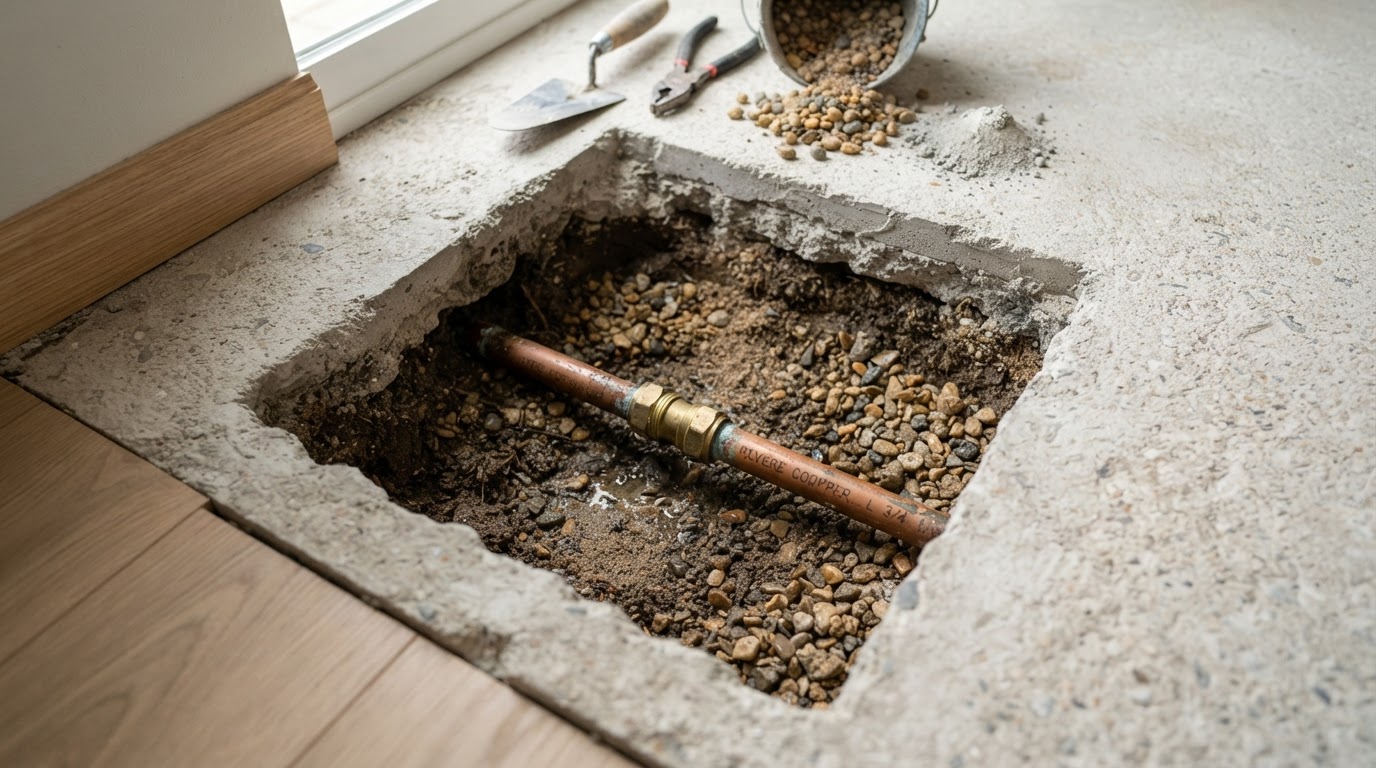
Elk Grove Repiping: Slab Leak Repair Options for Elk Grove Homes
Many Elk Grove homes are built on concrete slabs, and some have water lines running under them. When one of those lines leaks, you have a few ways to fix it. This guide from Elk Grove Repiping covers the signs, how the leak gets found, and how each repair option compares.
Monday to Saturday, 7:00 AM to 7:00 PM
Get a Free Repipe Quote
Last updated: 2026-11-19
Signs of a slab leak
- A warm or hot spot on the floor
- Water running sounds with everything off
- A water meter that keeps moving
- A water bill that jumps for no reason
- Damp carpet, cracked tile, or swollen baseboards
- A water heater that runs constantly
- Mold or mildew smell near the floor
A warm spot usually means a hot water line. A damp spot with no warmth can mean a cold line. Both need fixing.
First step: check the meter
Shut off every fixture and irrigation zone. Go to the water meter, usually in a box near the curb, and watch the dial or the small flow indicator. If it moves, water is going somewhere. If you can, close the main shutoff at the house. If the meter stops, the leak is inside the house, which could be the slab. If it keeps moving, the leak is likely between the meter and the house.
How the leak gets found
A good leak detection keeps the repair small. We isolate the hot and cold lines to see which one is losing pressure, then use acoustic listening gear to pinpoint the sound through the concrete. A thermal camera helps on hot lines. The goal is a mark on the floor within a foot or two of the leak. See leak detection.
The three repair options
| Reroute | Direct repair | Repipe | |
|---|---|---|---|
| What happens | New line runs through attic and walls. Old line is abandoned. | Floor is opened at the leak and the pipe is repaired. | All supply lines are replaced and moved overhead. |
| Floor damage | None | Concrete and flooring cut and patched | None |
| Wall openings | A few small ones | None | More, throughout the house |
| Best for | Most slab leaks, especially under finished floors | Easy-to-reach leaks in healthy pipe | Repeat slab leaks or failing pipe throughout |
| Chance of another leak in that line | None, it's out of the slab | Other spots in the old line can still fail | None, all lines are overhead |
Why we usually recommend a reroute
Breaking into a slab means cutting through flooring, tile, or hardwood, jackhammering concrete, repairing the pipe, pouring new concrete, and replacing the flooring. That's a lot of work and mess, and the rest of the old line is still under the slab.
A reroute skips all that. We run a new line through the attic and drop it into the wall at the fixture. The old line gets capped and left in place. It usually takes a day, and you end up with a few drywall patches instead of a floor repair.
A direct repair still makes sense in some cases, like a leak in an unfinished area or a garage, or a very short line in otherwise healthy pipe.
When it's time to repipe
If you've had two or more slab leaks, the lines under the slab are telling you something. They're the same age and the same material, and more will likely fail. At that point, a partial repipe or a whole house repipe moves everything overhead for good.
What about insurance?
Many homeowners policies cover some of the cost of getting to the leak, like opening and repairing the floor, and some of the water damage. Fewer cover the pipe repair itself. Every policy is different, so call your agent. We'll give you a written report of what we found and what we did.
Related services
Slab leak FAQs
Can a slab leak damage my foundation?
A long-running leak can wash out soil under the slab. Fixing it early lowers that risk.
Can I wait to fix a slab leak?
A small leak can wait a short time, but it keeps running up your bill and can damage floors. Don't wait long.
Is epoxy pipe lining an option?
Some companies offer it. We focus on reroutes and repipes because they take the line out of the slab entirely.
How long does a reroute take?
Most are done in a day, with patching after the inspection.
Does a reroute need a permit?
Yes, in most cases. We pull it with the city or county.
Why do hot lines leak more often?
Hot water makes pipe expand and contract every time you use it, which wears it against the concrete and gravel.