Elk Grove Repiping: Slab Leak Repair in Elk Grove, CA
Elk Grove Repiping does slab leak repair in Elk Grove, CA. Most homes here sit on concrete slabs, and many have water lines running under that concrete. When one of those lines leaks, we find the exact spot, then fix it by rerouting the line overhead or by opening the slab and repairing that section.
Monday to Saturday, 7:00 AM to 7:00 PM
Get a Free Repipe Quote
What is a slab leak?
A slab leak is a leak in a water line under or inside your concrete foundation. Builders often ran copper or other pipe under the slab before the concrete was poured. Over the years, those lines can wear through from friction against the concrete or gravel, from corrosion, or from movement in the soil.
Hot lines tend to fail first, because heat makes pipe expand and contract every time you use hot water.
What are the signs of a slab leak?
- A warm or hot spot on the floor, often near the kitchen or a bathroom
- The sound of running water when everything is off
- A water meter that keeps moving with every fixture shut off
- A water bill that jumps for no reason
- Damp carpet, swollen baseboards, or cracked tile
- A water heater that runs more than it should
- Low water pressure that comes on suddenly
If you see a couple of these, shut off your fixtures and watch the meter. If it moves, call us. Our slab leak repair options guide explains what to check.
How do you find the leak?
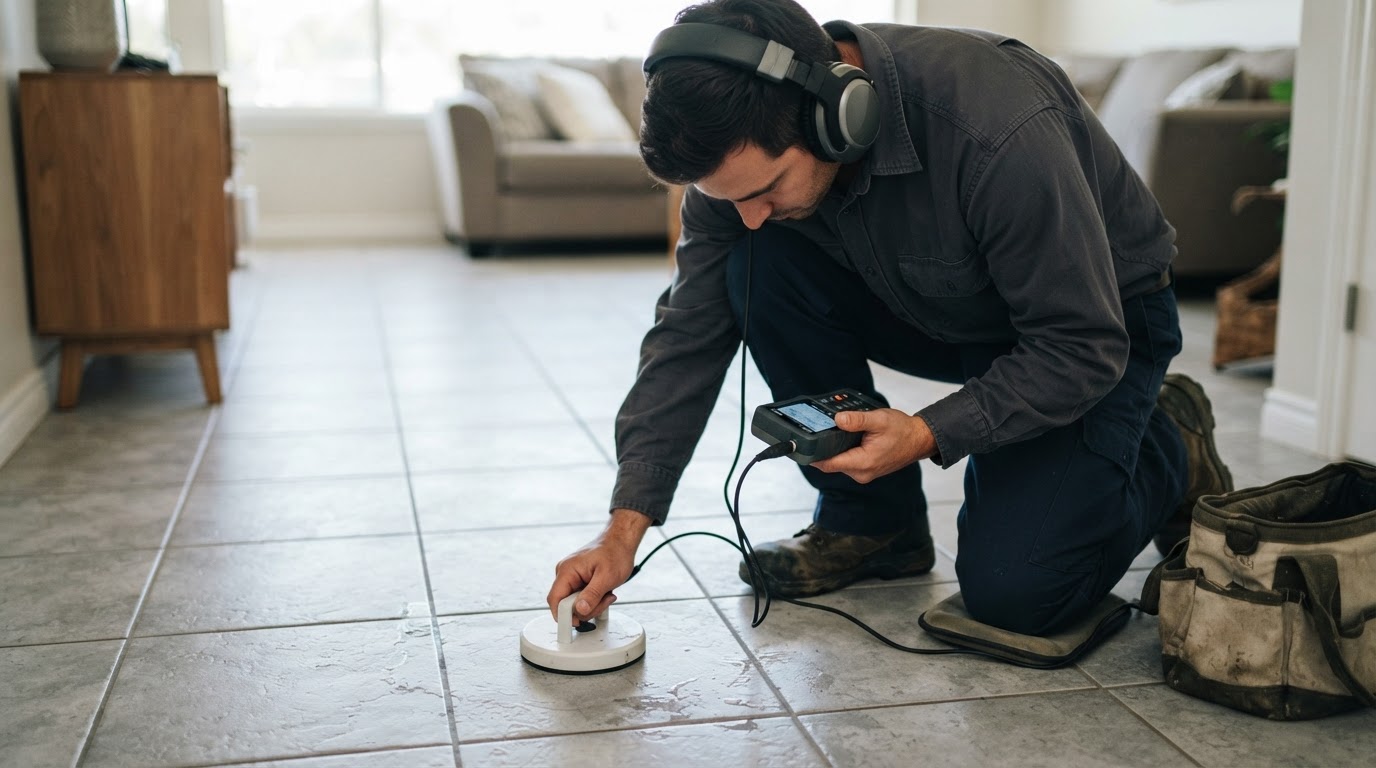
We use leak detection to find the leak before opening anything. That includes isolating hot and cold lines, pressure testing, acoustic listening gear, and thermal imaging when it helps. The goal is to put a mark on the floor within a foot or two of the leak.
What are the repair options?
There are two main ways to fix a slab leak.
| Option | How it works | Good fit when |
|---|---|---|
| Reroute | We abandon the leaking line and run a new one through the attic and walls | The pipe is older, the leak is under finished flooring, or other lines are likely to fail |
| Direct repair | We open the floor at the leak, cut out the bad section, and repair it | The leak is in an easy spot, the pipe is in good shape, and it's a one-time problem |
| Repipe | We replace all the supply lines and move them overhead | There have been repeat slab leaks or the whole system is failing |
In most Elk Grove homes, we recommend a reroute. Breaking up the slab means cutting through flooring, tile, or hardwood, then patching concrete and replacing flooring. A reroute usually means a few small drywall openings instead. And once a line is overhead, it's out of the slab for good.
If you've had two or three slab leaks already, it's usually time to look at a partial repipe or a whole house repipe.
Does insurance cover slab leaks?
Many homeowners policies cover some of the water damage and the cost to access the leak, like breaking out and repairing the floor. Fewer cover the pipe repair itself. Every policy is different. Call your agent, and we'll give you a written description of what we found and what we did.
Do you patch the drywall after a slab leak reroute?
Yes. Reroutes need a few openings to drop the new line down to the fixture. We patch and texture each one after the inspection.
Related services
Areas we serve
Slab leak repair FAQs
Is a slab leak an emergency?
It can be. If water is coming up through the floor or the leak is big, shut off the main and call. A slow leak is still worth fixing soon, because it can damage flooring and the soil under the house.
How long does slab leak repair take?
A reroute usually takes a day. A direct repair can take a day or two, plus time for the concrete to cure before flooring goes back.
Will my foundation be damaged?
A long-running leak can wash out soil under the slab. Fixing it early lowers that risk.
Can you fix a slab leak without breaking the floor?
Yes. A reroute leaves the slab alone. We run a new line overhead instead.
Why did my slab leak happen?
Common causes are pipe rubbing on concrete or gravel, corrosion, and the constant expansion of hot lines. Soil movement can add stress too.
Will I get another slab leak?
If the lines under the slab are the same age, it's possible. Moving them overhead takes away that risk.